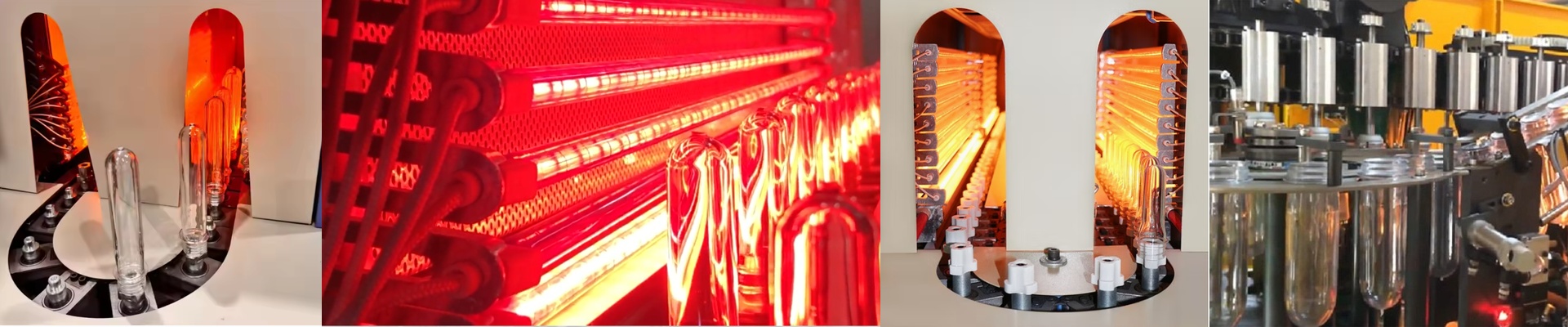
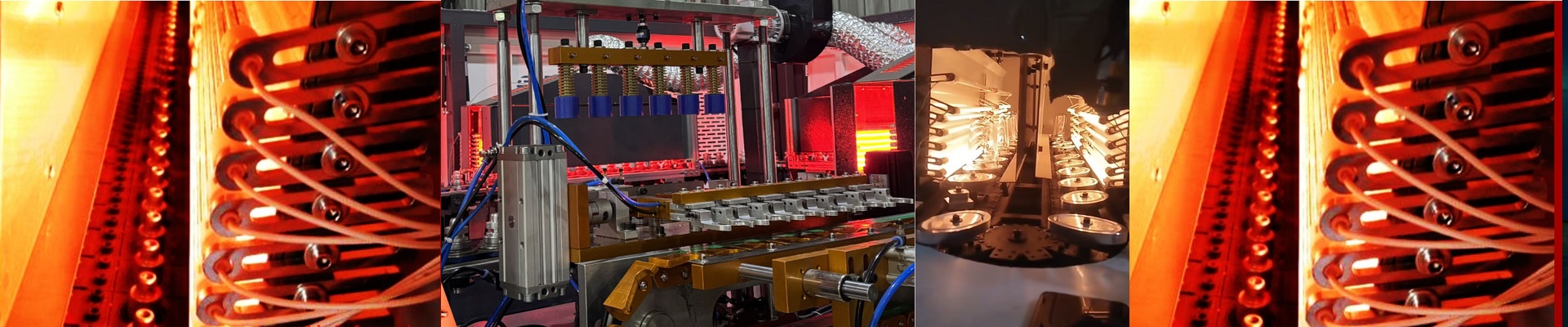
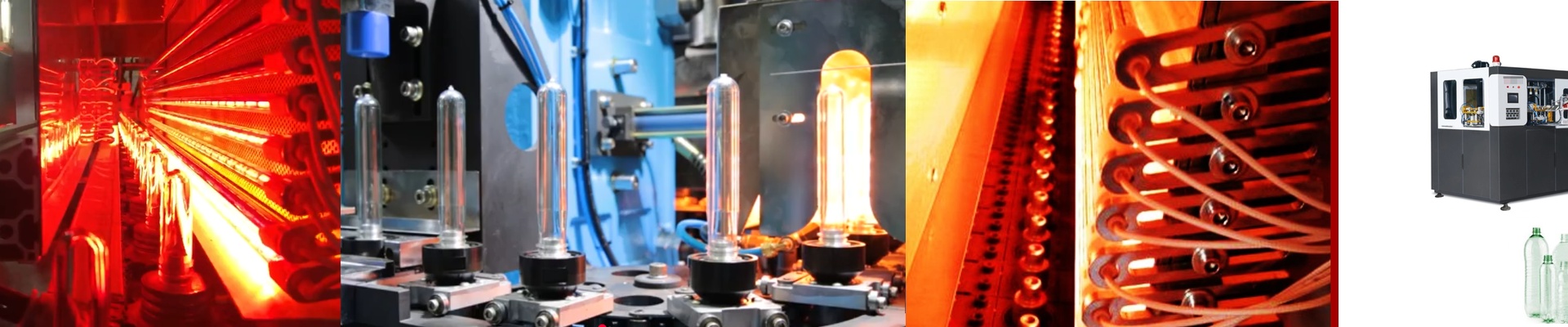

On the blow molding line, uneven preform heating doesn’t just cost you speed—it writes your scrap report. When the heating tunnel can’t hold steady, you end up with weak biaxial stretch, wall thickness that wanders, and caps that split under thermal shock. That’s why we built our heat-resistant ceramic caps to keep infrared emitters stable, cycle after cycle. What matters, technically We run short-wave infrared emitters with a high-purity quartz tube and a ceramic end-cap that’s made to live in thermal cycling. It takes the rapid heat-up without micro-cracking, while the filament geometry keeps output density even across the preform neck and body. Specs are matched to what’s already on the floor: standard R7s connectors, 1200–2400 W power bands, and 100–240 V options. We tune the spectral response to PET absorption so you get fast, repeatable heating without scorching the surface. Here’s the point: it’s about hitting the right temperature profile on the blow molder you’re already running. Our emitters are engineered as direct replacements for heating modules on Sidel Matrix, Krones Contiform, and Husky HyPET systems. Swap the lamp, and you don’t have to re-map the whole heating tunnel. The payoff is fewer temperature swings, more consistent bottle weight, and less downtime when you change lamps. In practice, you get quicker heat-up, stable output, and fewer rejects that trace back to thermal variability. Installation is straightforward, but alignment is where people get tripped up. Even a small gap or a connector that isn’t seated right can give you uneven heating and shorten lamp life. Confirm the lamp length and wattage match the OEM’s heating zone design, and check reflector condition—pitted reflectors scatter energy and steal output. If you’re running high-cavitation or extended cycles, make sure your power supply can hold voltage under peak load. Treat the heating zone like a system: the lamp, the reflector, and the power—all of it matters.