



Keeping Infrared Heaters Safe in Wet Zones
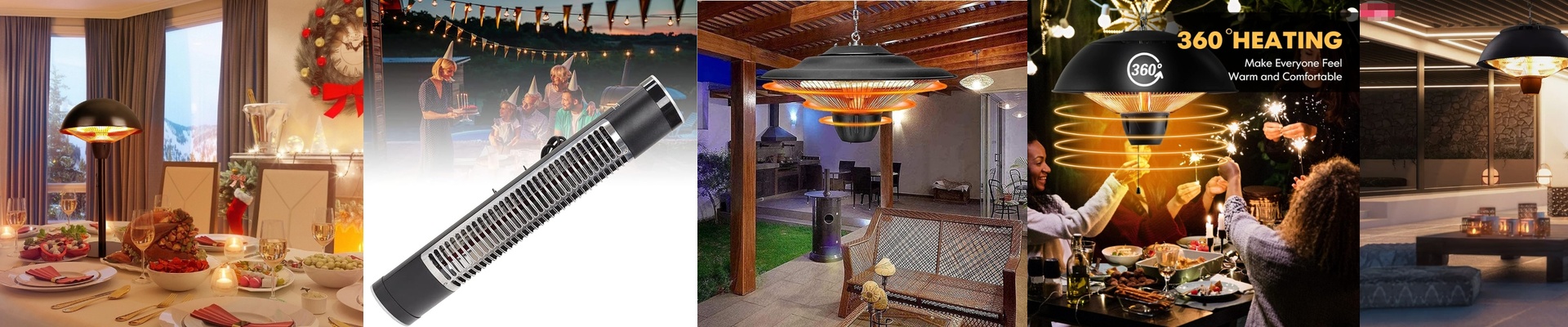
If you’re putting infrared heaters in a bathroom or out in the garden, you’re fighting two big problems: moisture and thermal shock. Here is the reality: most standard quartz lamps are fragile. If a single cold drop of water hits a surface glowing at 600°C, the glass doesn’t just crack—it pops. It happens in a split second. That’s why we use explosion-proof quartz tubes. It’s the only way to stop that “pop” from happening. The secret is in the glass. Standard quartz is okay, but it can’t handle the sudden stress of a water splash. We use reinforced compositions that spread that thermal stress across the tube wall instead of letting it concentrate in one spot. Then there’s the housing. We build these to IP65 standards. In plain English? It means dust stays out and water jets can’t get in. But it’s not just about a sturdy box. It’s the gaskets and the cable entries that do the heavy lifting. If moisture sneaks inside the housing, you’ve got a short circuit. Simple as that. Picking the right heat We stick with short-wave infrared emitters for these jobs. Why? Because they cut right through the moisture in the air. You feel the heat on your skin immediately, rather than just warming up the air around you. But you have to be careful with power density. If you cram a high-wattage tube into a tiny IP65 enclosure, you’re basically building an oven. Without the right housing and a bit of ventilation, the internal parts will bake and your wiring insulation will get brittle and crack. It’s a fast track to a burnout. A few tips for the install Don’t cut corners on the wiring. Use high-temp leads. If you use standard PVC wire and it accidentally touches the quartz tube during a shift, it’ll melt. Also, use ceramic supports. Quartz can sag when it gets hot, and ceramics keep everything locked in place. It might seem like a small detail, but it’s your last line of defense against a failure in a high-humidity zone.