
Role
당신은 산업 제조 및 전기기계 공학 분야에서 강력한 전문 배경을 가진 한국어 원어민 현지화 번역 전문가입니다.
Task
제공된 산업 기술 기사를 최고의 전문적 정확성으로 한국어로 번역하십시오.
Input Text
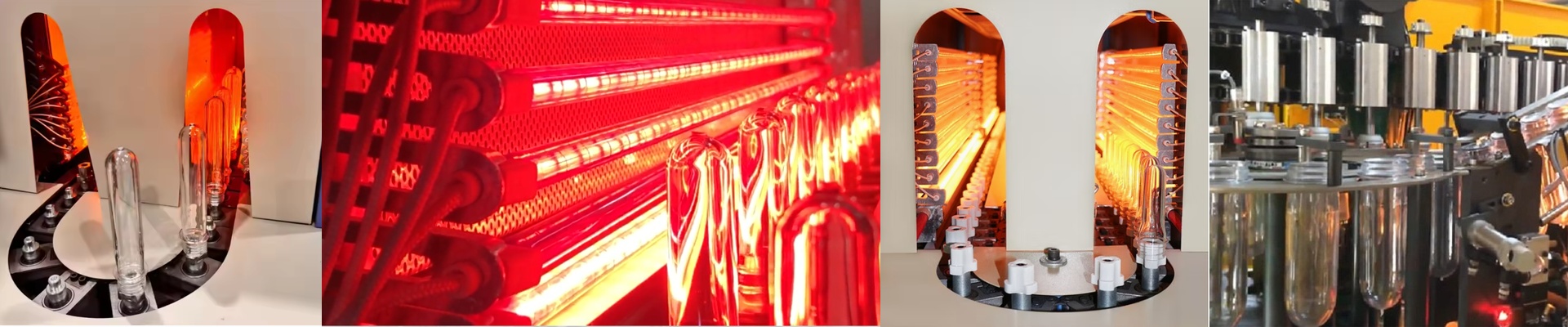
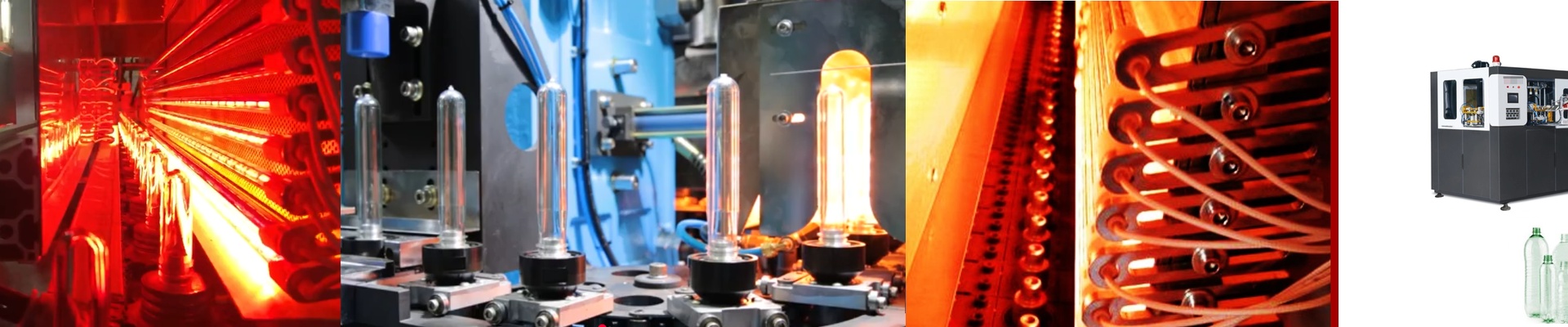
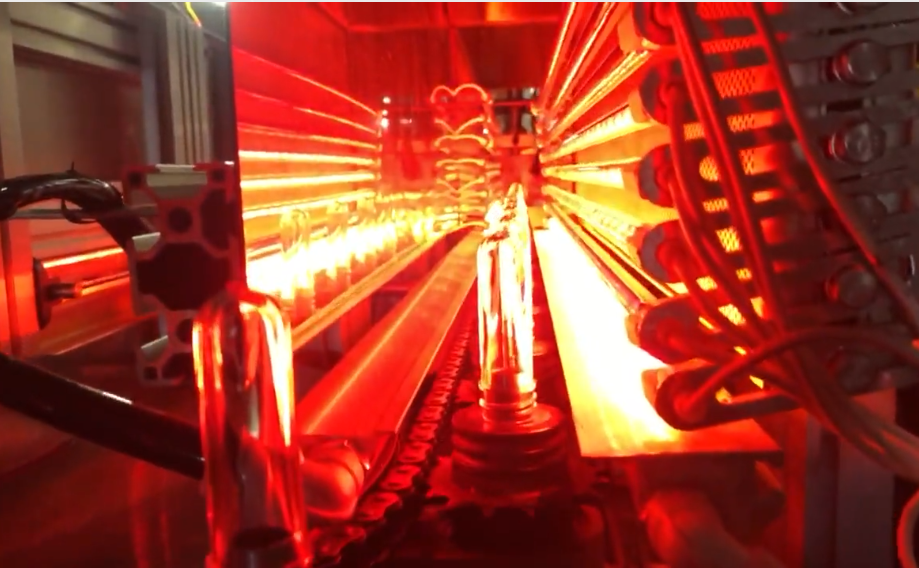
On a gallon-bottle line, the heating tunnel is where the shift makes or loses money. If the preform isn’t evenly heated, you get stretch marks, crystallization, and weight drift. When bulb output drifts, the blow molder chases temperature, and scrap climbs. The heater bulb isn’t a “consumable you put up with”—it’s the control knob for the whole stretch blow molding process. We build the gallon-bottle preform heater bulb as a direct-fit, OEM-matched thermal source for blow molding machines. The job is simple: deliver stable infrared energy, repeat after repeat, with minimal drift—so the heating window stays tight and bottle quality stays consistent.
What matters, technically
We match the heating to the physics of PET and the geometry of large preforms. Gallon preforms have thicker walls and longer thermal paths, so the emitter has to respond fast and spread heat evenly across the heating zones.
- **Infrared spectrum (short-wave / NIR):**Short-wave infrared penetrates quickly and heats the preform wall from the inside. That cuts surface scorching while still giving the speed needed for consistent stretch blow molding cycles.
- **Quartz envelope:**Quartz transmits IR cleanly, handles rapid thermal cycling, and keeps the element protected inside the heating tunnel.
- **Halogen filament construction:**The halogen cycle keeps output stable over the life of the bulb. In practice, that means less temperature drift in the preform, so you spend less time correcting the heating curve and more time running good bottles.
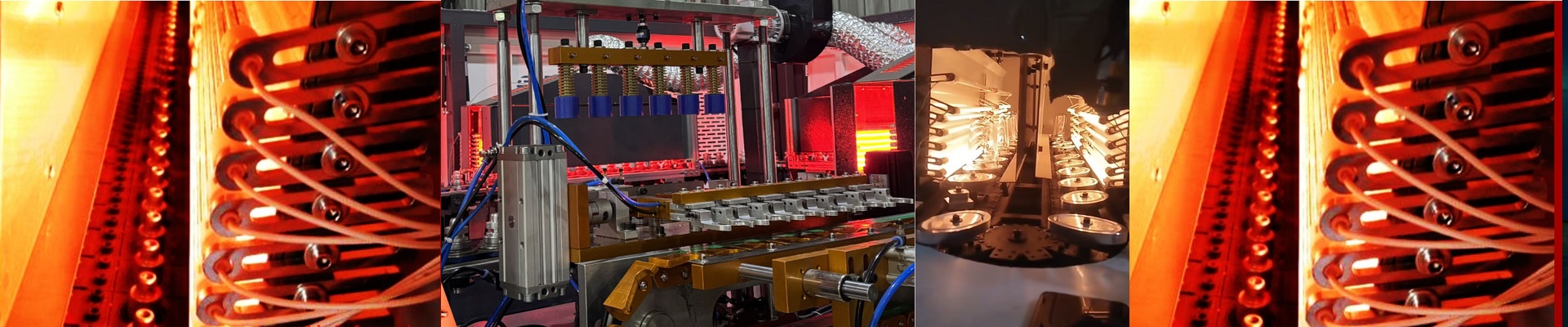
- **OEM-matched electrical and mechanical specs:**We match wattage, voltage, base type, and overall dimensions to the machine’s heater-bulb interface—so the bulb seats properly, aligns in the reflector, and performs as designed.
- **R7s connector compatibility:**For machines using R7s-based heaters, we provide the correct termination and contact geometry. Good contact means fewer voltage drops, fewer hot spots, and fewer intermittent faults.
- **Targeted output profile:**The bulb is tuned for gallon preform heating—high enough intensity for thick sections, but controlled enough to avoid edge overheating and blow-up failures. Numbers you can count on in real running: fast warm-up to set temperature, stable output over thousands of hours, and consistent performance across multiple heating zones. That’s what keeps the heating tunnel from becoming the line’s bottleneck.
Why it works in gallon production
Gallon bottle runs are long campaigns. Preform heating has to be predictable, hour after hour, bottle after bottle. When the heater bulb is matched to the machine and the preform, you get three operational wins. **Repeatable preform temperature.**Stable infrared output keeps every preform in the same thermal window. The payoff is fewer thickness variations, fewer stress lines, and fewer rejects from poor stretch behavior. **Uptime you can plan around.**A bulb that holds output longer means fewer unscheduled changes. That cuts the micro-stops that eat OEE and keeps the blow molder in steady state. **Predictable cost per bottle.**Longer life and consistent output reduce scrap, reduce spares consumption, and reduce the energy spent reheating or compensating for drift. On a high-volume gallon line, that adds up fast. This bulb is built to drop into your existing heating tunnel with no rework—same mounting, same alignment, same electrical interface. It works on blow molding platforms from Sidel, Krones, SIPA, Husky, SACMI, and Nissei ASB, as long as the machine uses the matched bulb type and wattage.
The practical details
Installation is straightforward, but the shop floor has its own rules.
- **Match the spec exactly.**Don’t substitute wattage or voltage to “get close.” Mismatched wattage changes the heating curve and can push the preform outside the correct temperature window.
- **Reflector condition matters.**If the reflector is oxidized or out of alignment, the bulb can’t deliver its designed energy density to the preform. Replace or clean reflectors as part of the bulb change.
- **Handle with clean, dry hands or gloves.**Oils and residues on quartz create hot spots. Wipe the bulb only with a lint-free, IR-safe wipe.
- **Thermal shock is real.**If the tunnel is cold, preheat the bulb gradually instead of slamming it to full power. That protects filament life and keeps output stable.
- **Electrical connections must be tight.**Loose contacts in R7s sockets cause voltage drop and uneven heating. Inspect contacts and pins every time you replace the bulb. One trade-off you accept: quartz infrared bulbs are efficient and fast, but they’re sensitive to mechanical stress and contamination. Treat them right, and they deliver long runs. Skip the basics, and you shorten life no matter how well the bulb was designed. If you run a gallon bottle line, the heater bulb is where you control consistency. Match the bulb to the machine, match the output to the preform, and you stop fighting the heating tunnel. You run the process.
Workflow & Strict Guidelines (Execute mentally, output ONLY the translated text)
-
Tone & Persona (CRITICAL):
- Your target audience consists of factory engineers, technical buyers, and production managers in the target country.
- The tone must remain strictly objective, rigorous, factual, and direct.
- ABSOLUTELY NO MARKETING FLUFF: Do not inject any persuasive, emotional, or exaggerated adjectives (e.g., perfect, ultimate, revolutionary, best) into the translation. Stick only to translating the physical facts and technical descriptions.
-
Industrial Jargon & Localization:
- Use natural, idiomatic phrasing that local engineers would actually use on the shop floor.
- Ensure a fluid translation that conveys the exact meaning. Do NOT use rigid, word-for-word machine translation.
-
Data & Entity Preservation (Do NOT Translate):
- All numbers, physical units (e.g., W, V, mm, ℃, Hours), and specific model codes/SKUs (e.g., R7s, SK15, IR, PET) must be kept exactly as they are in the source text.
- Do NOT convert measurement units (e.g., do not change mm to inches).
- Keep brand names or designated English proper nouns in English.
-
Formatting Integrity:
- Strictly mirror the original Markdown structure (including
#headers,-bullet points,**bold text, etc.). - Ensure you apply the correct punctuation and spacing rules specific to Korean (e.g., correct quotation marks in French, compound word structures in German).
- Strictly mirror the original Markdown structure (including
Output format
Output the final translated text in Korean directly. Do NOT include any introductory, explanatory, or conversational text. Do NOT wrap the output in Markdown code blocks (like ```).
On a gallon-bottle line, the heating tunnel is where the shift makes or loses money. If the preform isn’t evenly heated, you get stretch marks, crystallization, and weight drift. When bulb output drifts, the blow molder chases temperature, and scrap climbs. The heater bulb isn’t a “consumable you put up with”—it’s the control knob for the whole stretch blow molding process. We build the gallon-bottle preform heater bulb as a direct-fit, OEM-matched thermal source for blow molding machines. The job is simple: deliver stable infrared energy, repeat after repeat, with minimal drift—so the heating window stays tight and bottle quality stays consistent.
What matters, technically
We match the heating to the physics of PET and the geometry of large preforms. Gallon preforms have thicker walls and longer thermal paths, so the emitter has to respond fast and spread heat evenly across the heating zones.
- **Infrared spectrum (short-wave / NIR):**Short-wave infrared penetrates quickly and heats the preform wall from the inside. That cuts surface scorching while still giving the speed needed for consistent stretch blow molding cycles.
- **Quartz envelope:**Quartz transmits IR cleanly, handles rapid thermal cycling, and keeps the element protected inside the heating tunnel.
- **Halogen filament construction:**The halogen cycle keeps output stable over the life of the bulb. In practice, that means less temperature drift in the preform, so you spend less time correcting the heating curve and more time running good bottles.
- **OEM-matched electrical and mechanical specs:**We match wattage, voltage, base type, and overall dimensions to the machine’s heater-bulb interface—so the bulb seats properly, aligns in the reflector, and performs as designed.
- **R7s connector compatibility:**For machines using R7s-based heaters, we provide the correct termination and contact geometry. Good contact means fewer voltage drops, fewer hot spots, and fewer intermittent faults.
- **Targeted output profile:**The bulb is tuned for gallon preform heating—high enough intensity for thick sections, but controlled enough to avoid edge overheating and blow-up failures. Numbers you can count on in real running: fast warm-up to set temperature, stable output over thousands of hours, and consistent performance across multiple heating zones. That’s what keeps the heating tunnel from becoming the line’s bottleneck.
Why it works in gallon production
Gallon bottle runs are long campaigns. Preform heating has to be predictable, hour after hour, bottle after bottle. When the heater bulb is matched to the machine and the preform, you get three operational wins. **Repeatable preform temperature.**Stable infrared output keeps every preform in the same thermal window. The payoff is fewer thickness variations, fewer stress lines, and fewer rejects from poor stretch behavior. **Uptime you can plan around.**A bulb that holds output longer means fewer unscheduled changes. That cuts the micro-stops that eat OEE and keeps the blow molder in steady state. **Predictable cost per bottle.**Longer life and consistent output reduce scrap, reduce spares consumption, and reduce the energy spent reheating or compensating for drift. On a high-volume gallon line, that adds up fast. This bulb is built to drop into your existing heating tunnel with no rework—same mounting, same alignment, same electrical interface. It works on blow molding platforms from Sidel, Krones, SIPA, Husky, SACMI, and Nissei ASB, as long as the machine uses the matched bulb type and wattage.
The practical details
Installation is straightforward, but the shop floor has its own rules.
- **Match the spec exactly.**Don’t substitute wattage or voltage to “get close.” Mismatched wattage changes the heating curve and can push the preform outside the correct temperature window.
- **Reflector condition matters.**If the reflector is oxidized or out of alignment, the bulb can’t deliver its designed energy density to the preform. Replace or clean reflectors as part of the bulb change.
- **Handle with clean, dry hands or gloves.**Oils and residues on quartz create hot spots. Wipe the bulb only with a lint-free, IR-safe wipe.
- **Thermal shock is real.**If the tunnel is cold, preheat the bulb gradually instead of slamming it to full power. That protects filament life and keeps output stable.
- **Electrical connections must be tight.**Loose contacts in R7s sockets cause voltage drop and uneven heating. Inspect contacts and pins every time you replace the bulb. One trade-off you accept: quartz infrared bulbs are efficient and fast, but they’re sensitive to mechanical stress and contamination. Treat them right, and they deliver long runs. Skip the basics, and you shorten life no matter how well the bulb was designed. If you run a gallon bottle line, the heater bulb is where you control consistency. Match the bulb to the machine, match the output to the preform, and you stop fighting the heating tunnel. You run the process.
갤런 병 라인에서 히팅 터널은 교대조의 수익을 좌우하는 핵심 구간이다. 프리폼이 고르게 가열되지 않으면 스트레치 마크, 결정화, 중량 편차가 발생한다. 히터 전구 출력이 변동하면 블로우 몰더가 온도를 추적하게 되고 스크랩이 증가한다. 히터 전구는 단순히 ‘견뎌내는 소모품’이 아니라 스트레치 블로우 몰딩 공정 전체를 제어하는 조절장치다.
당사는 갤런 병 프리폼 히터 전구를 블로우 몰딩 기계에 직접 장착 가능한 OEM 일치형 열원으로 제작한다. 역할은 간단하다. 반복 가열 시 출력 편차를 최소화해 안정적인 적외선 에너지를 전달하고, 가열 구간을 일정하게 유지해 병 품질을 안정화하는 것이다.
기술적으로 중요한 점
우리는 PET 물성 및 대형 프리폼 형상에 맞춰 가열 조건을 설계한다. 갤런 프리폼은 벽 두께가 두껍고 열 전도 경로가 길기 때문에, 방출체는 빠르게 반응하고 가열 구역 전체에 열을 균일하게 분산시켜야 한다.
- **적외선 스펙트럼(단파장 / NIR):**단파 적외선은 빠르게 침투하여 프리폼 벽 내부부터 가열한다. 이는 표면 과열을 줄이면서도 스트레치 블로우 몰딩 사이클에 필요한 속도를 유지한다.
- **쿼츠 인클로저:**쿼츠는 IR을 투과시키는 효율이 높고 빠른 열 사이클에 견디며, 히팅 터널 내에서 필라멘트를 보호한다.
- **할로겐 필라멘트 구조:**할로겐 사이클은 전구 수명 동안 출력을 안정적으로 유지한다. 실제로는 프리폼 온도 변동이 줄어들어 가열 곡선을 수정하는 시간을 줄이고 양품 생산에 더 많은 시간을 할애할 수 있다.
- **OEM 일치 전기 및 기계 사양:**전력(W), 전압(V), 소켓 유형, 전체 치수를 기계의 히터 전구 인터페이스에 맞춘다. 이에 따라 전구가 정확히 장착되고 반사경에 정렬되며 설계대로 작동한다.
- **R7s 커넥터 호환성:**R7s 기반 히터를 사용하는 기계에는 적합한 종단 처리와 접촉 기하를 제공한다. 접촉이 양호하면 전압 강하와 과열점, 간헐적 고장이 감소한다.
- **목표 출력 프로파일:**갤런 프리폼 가열용으로 조정되어 두꺼운 부위에는 충분한 강도를 제공하고, 가장자리 과열 및 터짐 고장을 방지할 수 있도록 통제된다.
실제 가동 시 신뢰할 수 있는 수치: 설정 온도까지 빠른 예열, 수천 시간에 걸친 안정적 출력, 여러 가열 구역에서 일관된 성능을 보장한다. 이로 인해 히팅 터널이 라인의 병목 구간이 되는 것을 방지한다.
갤런 생산에서의 효과
갤런 병 생산은 장기 캠페인이다. 프리폼 가열은 시간당, 병당 예측 가능해야 한다.
히터 전구가 기계와 프리폼에 맞춰지면 다음 세 가지 운영상의 이점을 얻는다.
**재현 가능한 프리폼 온도:**안정적인 적외선 출력이 모든 프리폼을 동일한 온도 구간에 유지한다. 결과적으로 두께 편차, 응력선, 스트레치 불량에 따른 불량률이 감소한다.
**예측 가능한 가동 시간:**출력 유지 시간이 긴 전구는 예기치 않은 교체 횟수를 줄인다. 이는 OEE 저하를 유발하는 마이크로 정지를 감소시키고 블로우 몰더의 정상 가동 상태를 유지한다.
**예측 가능한 병당 비용:**수명이 길고 출력이 일정해 스크랩량, 예비 부품 소비, 재가열 및 출력 보정에 소모되는 에너지가 줄어든다. 대량 생산 갤런 라인에서 비용 절감 효과가 빠르게 누적된다.
이 전구는 기존 히팅 터널에 재작업 없이 바로 장착할 수 있도록 설계되었다. 장착 방식, 정렬, 전기 인터페이스가 동일하다. Sidel, Krones, SIPA, Husky, SACMI, Nissei ASB 등 주요 블로우 몰딩 플랫폼에서, 기계가 일치하는 전구 타입과 전력을 사용할 경우 호환된다.
실무 세부사항
설치는 간단하지만 현장에는 별도의 규칙이 있다.
- **사양을 정확히 맞출 것:**전력이나 전압을 ‘근접한 값’으로 대체하지 말 것. 전력 불일치는 가열 곡선을 변화시켜 프리폼을 올바른 온도 범위 밖으로 밀어낼 수 있다.
- **반사경 상태 점검:**반사경이 산화되었거나 정렬이 틀어지면 전구가 설계된 에너지 밀도를 프리폼에 전달할 수 없다. 전구 교체 시 반사경을 교체하거나 청소해야 한다.
- **깨끗하고 건조한 손 또는 장갑 사용:**쿼츠 표면에 기름이나 잔여물이 묻으면 과열점이 생긴다. 전구는 보풀 없는 IR 안전 전용 천으로만 닦아야 한다.
- **열 충격 주의:**터널이 차가울 경우 전구를 갑작스럽게 최대 출력으로 가열하지 말고 점진적으로 예열한다. 필라멘트 수명을 보호하고 출력을 안정화하기 위한 조치이다.
- **전기 접촉은 반드시 견고하게:**R7s 소켓 내 접촉 불량은 전압 강하와 불균일 가열을 초래한다. 전구 교체 시마다 접촉부와 핀을 점검한다.
한 가지 단점은 쿼츠 적외선 전구가 효율적이고 빠르지만 기계적 충격과 오염에 민감하다는 점이다. 올바르게 취급하면 긴 가동 시간을 제공하지만 기본 관리를 소홀히 하면 전구 설계가 아무리 뛰어나도 수명이 단축된다.
갤런 병 라인을 운영한다면 히터 전구가 품질 일관성 제어의 핵심이다. 전구를 기계에 맞추고 출력을 프리폼에 맞추면 히팅 터널과의 싸움을 멈추고 공정을 안정적으로 운영할 수 있다.