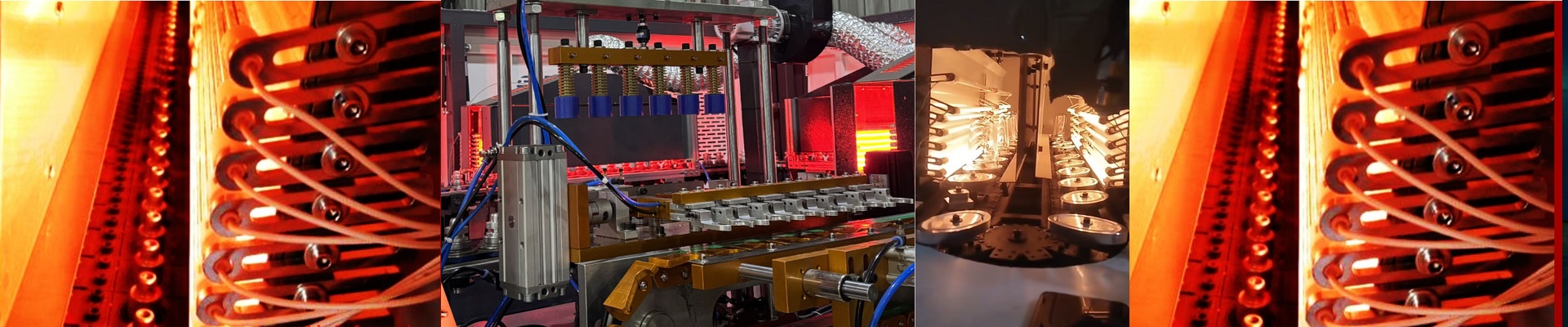
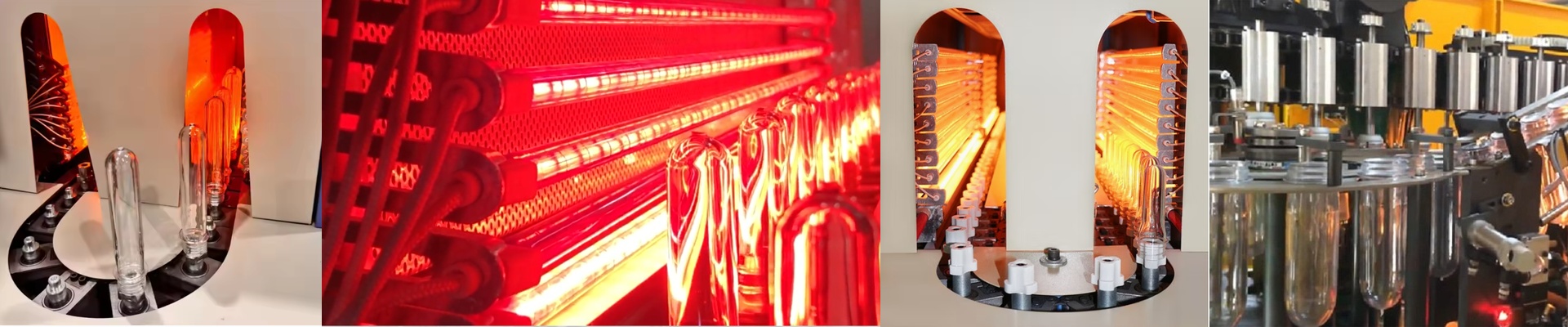
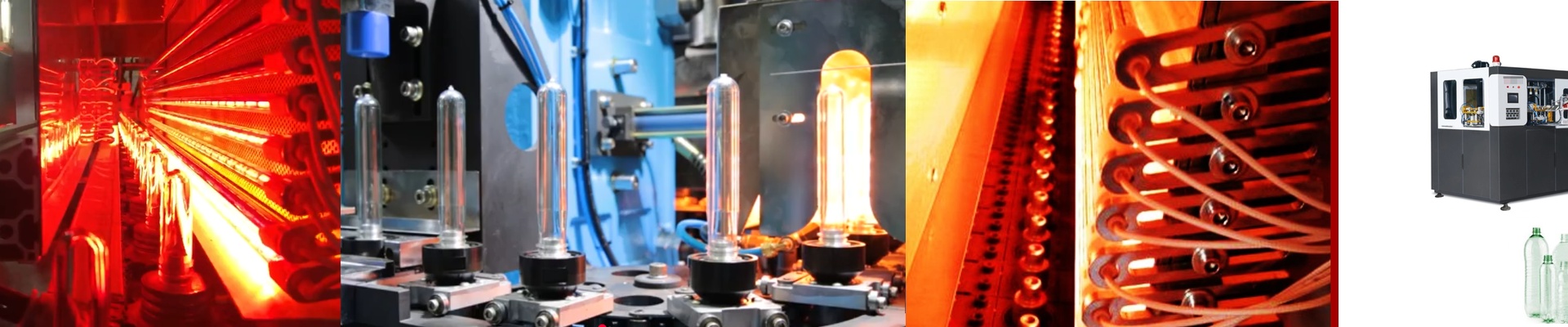

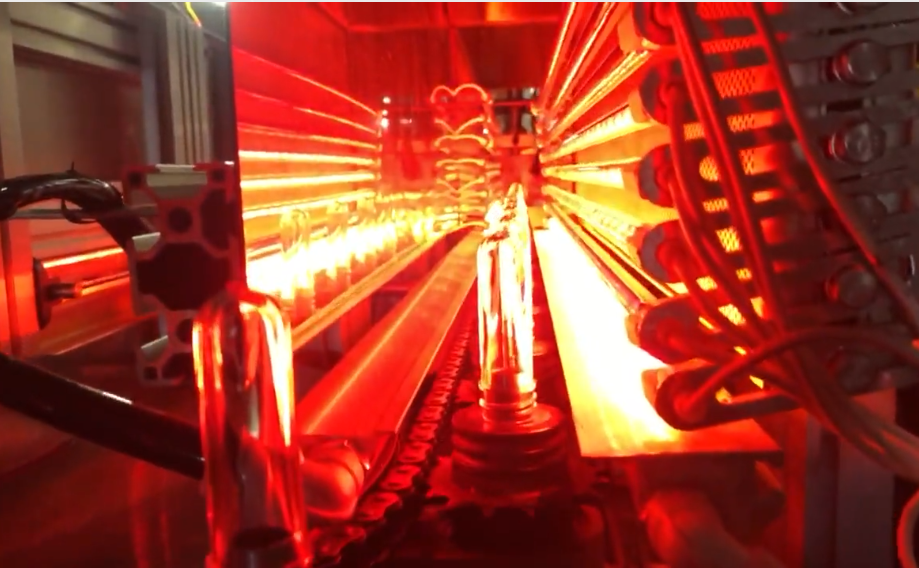
On a gallon-bottle line, the heating tunnel is where the shift makes or loses money. If the preform isn’t evenly heated, you get stretch marks, crystallization, and weight drift. When bulb output drifts, the blow molder chases temperature, and scrap climbs. The heater bulb isn’t a “consumable you put up with”—it’s the control knob for the whole stretch blow molding process. We build the gallon-bottle preform heater bulb as a direct-fit, OEM-matched thermal source for blow molding machines. The job is simple: deliver stable infrared energy, repeat after repeat, with minimal drift—so the heating window stays tight and bottle quality stays consistent.
What matters, technically
We match the heating to the physics of PET and the geometry of large preforms. Gallon preforms have thicker walls and longer thermal paths, so the emitter has to respond fast and spread heat evenly across the heating zones.
- **Infrared spectrum (short-wave / NIR):**Short-wave infrared penetrates quickly and heats the preform wall from the inside. That cuts surface scorching while still giving the speed needed for consistent stretch blow molding cycles.
- **Quartz envelope:**Quartz transmits IR cleanly, handles rapid thermal cycling, and keeps the element protected inside the heating tunnel.
- **Halogen filament construction:**The halogen cycle keeps output stable over the life of the bulb. In practice, that means less temperature drift in the preform, so you spend less time correcting the heating curve and more time running good bottles.
- **OEM-matched electrical and mechanical specs:**We match wattage, voltage, base type, and overall dimensions to the machine’s heater-bulb interface—so the bulb seats properly, aligns in the reflector, and performs as designed.
- **R7s connector compatibility:**For machines using R7s-based heaters, we provide the correct termination and contact geometry. Good contact means fewer voltage drops, fewer hot spots, and fewer intermittent faults.
- **Targeted output profile:**The bulb is tuned for gallon preform heating—high enough intensity for thick sections, but controlled enough to avoid edge overheating and blow-up failures. Numbers you can count on in real running: fast warm-up to set temperature, stable output over thousands of hours, and consistent performance across multiple heating zones. That’s what keeps the heating tunnel from becoming the line’s bottleneck.
Why it works in gallon production
Gallon bottle runs are long campaigns. Preform heating has to be predictable, hour after hour, bottle after bottle. When the heater bulb is matched to the machine and the preform, you get three operational wins. **Repeatable preform temperature.**Stable infrared output keeps every preform in the same thermal window. The payoff is fewer thickness variations, fewer stress lines, and fewer rejects from poor stretch behavior. **Uptime you can plan around.**A bulb that holds output longer means fewer unscheduled changes. That cuts the micro-stops that eat OEE and keeps the blow molder in steady state. **Predictable cost per bottle.**Longer life and consistent output reduce scrap, reduce spares consumption, and reduce the energy spent reheating or compensating for drift. On a high-volume gallon line, that adds up fast. This bulb is built to drop into your existing heating tunnel with no rework—same mounting, same alignment, same electrical interface. It works on blow molding platforms from Sidel, Krones, SIPA, Husky, SACMI, and Nissei ASB, as long as the machine uses the matched bulb type and wattage.
The practical details
Installation is straightforward, but the shop floor has its own rules.
- **Match the spec exactly.**Don’t substitute wattage or voltage to “get close.” Mismatched wattage changes the heating curve and can push the preform outside the correct temperature window.
- **Reflector condition matters.**If the reflector is oxidized or out of alignment, the bulb can’t deliver its designed energy density to the preform. Replace or clean reflectors as part of the bulb change.
- **Handle with clean, dry hands or gloves.**Oils and residues on quartz create hot spots. Wipe the bulb only with a lint-free, IR-safe wipe.
- **Thermal shock is real.**If the tunnel is cold, preheat the bulb gradually instead of slamming it to full power. That protects filament life and keeps output stable.
- **Electrical connections must be tight.**Loose contacts in R7s sockets cause voltage drop and uneven heating. Inspect contacts and pins every time you replace the bulb. One trade-off you accept: quartz infrared bulbs are efficient and fast, but they’re sensitive to mechanical stress and contamination. Treat them right, and they deliver long runs. Skip the basics, and you shorten life no matter how well the bulb was designed. If you run a gallon bottle line, the heater bulb is where you control consistency. Match the bulb to the machine, match the output to the preform, and you stop fighting the heating tunnel. You run the process.